Strategie per un’Organizzazione Efficiente della Cucina
An efficiently organized kitchen gives everyday tasks a clear place: ingredients stay easy to find, preparation surfaces remain usable, and dishes return to storage without a struggle. The best approach combines practical kitchen organization with a layout that reflects how you actually cook. Start with your routines, then adjust cabinets, counters, and accessories around them rather than buying storage solutions first.
How do you organize a kitchen around everyday routines?
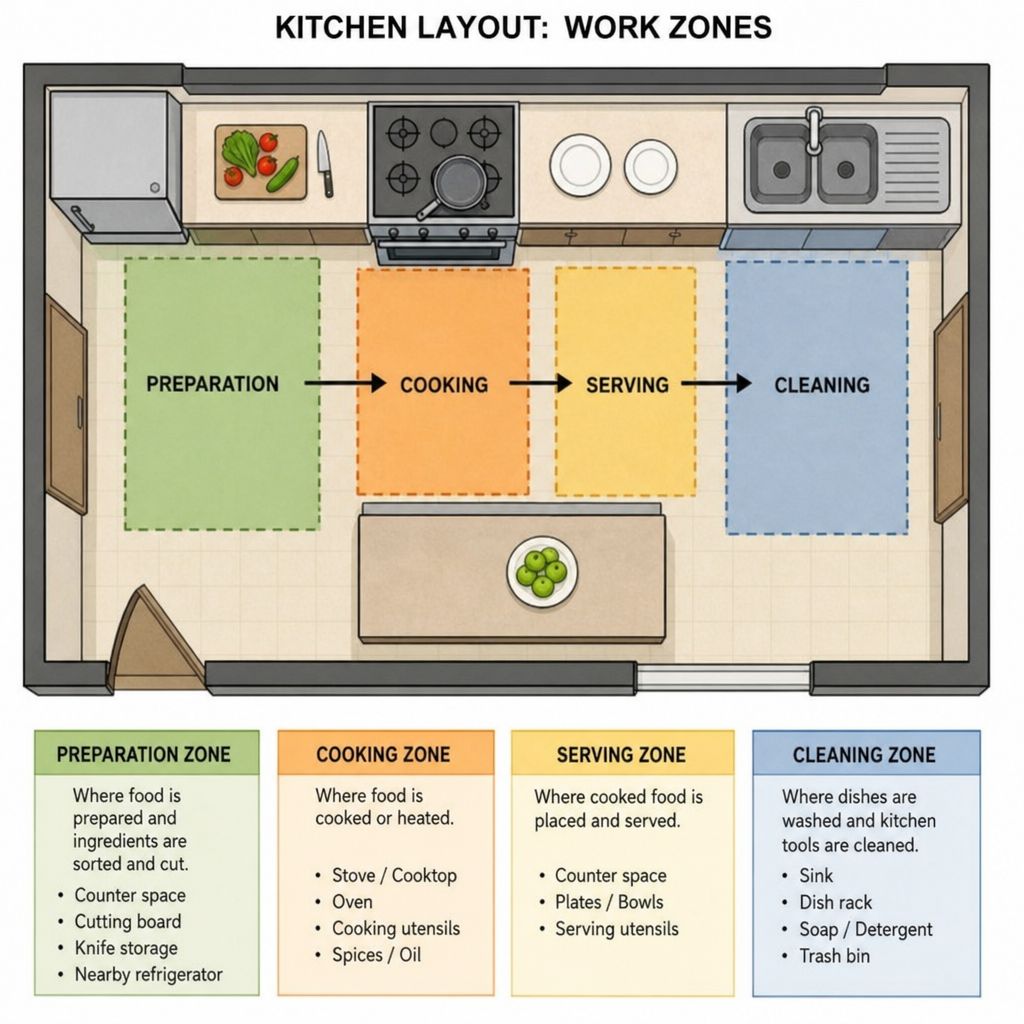
Organize your kitchen by grouping items around the tasks you perform most often, then placing frequently used tools within easy reach of those activities. Think in terms of preparing ingredients, cooking, serving, and cleaning rather than filling each cupboard independently. This gives every storage decision a practical purpose.
Walk through a familiar meal before moving anything. Notice where you collect ingredients, chop vegetables, reach for a pan, and put dirty utensils. If you repeatedly cross the room or move objects out of the way, those moments reveal where your current arrangement needs attention.
Create a few flexible zones:
- Preparation: Keep cutting boards, mixing bowls, and everyday utensils near your main work surface.
- Cooking: Position pans, lids, and cooking tools close to where you use them, without crowding the cooktop.
- Serving: Store plates, glasses, and cutlery where setting the table feels straightforward.
- Cleaning: Gather dishwashing supplies near the sink, separate from food and serving items.
These zones can overlap in a small room. The goal is fewer unnecessary movements, not a rigid layout.
Clear the excess before choosing storage
Empty one drawer or cupboard at a time so the project stays manageable. Sort its contents into items you use regularly, items needed occasionally, and things you no longer want. Separate damaged or incomplete pieces for a deliberate decision rather than returning them automatically.
Duplicates deserve particular attention. Several wooden spoons may be useful when cooking a large meal, but an overflowing drawer of nearly identical gadgets may simply make your preferred tools harder to find. Judge each category against your actual habits, not an imagined version of your routine.
Keep occasional-use equipment outside your most convenient storage areas. A serving platter used for celebrations does not need the same access as your breakfast bowls. If an appliance belongs to a hobby you no longer enjoy, consider whether it still deserves valuable kitchen space.
Before putting anything back, wipe the empty storage area and check what fits comfortably. Leave enough room to remove individual objects without unpacking the entire shelf.
Make drawers and cabinets easier to use
Good storage lets you see what you own and retrieve it without disturbing everything around it. Deep cupboards, tall shelves, and crowded drawers often need different solutions, so identify the specific obstacle before adding an organizer.
For drawers, group tools by function rather than forcing every item into a matching tray. A divider can separate baking utensils from everyday cutlery, while a larger open compartment may suit awkwardly shaped tools. Avoid packing compartments so tightly that putting things away becomes fiddly.
Inside cabinets, try these practical adjustments:
- Store flat items upright: Use a suitable divider for trays, cutting boards, or baking sheets so one can slide out independently.
- Separate lids from unstable stacks: Give lids a dedicated section if stacking them on pans makes access difficult.
- Bring small items forward: A removable bin can keep related packets or baking supplies together in a deep cupboard.
- Match shelf spacing to contents: Where shelves are adjustable, reduce wasted gaps without making items difficult to lift out.
Measure the usable interior before choosing kitchen accessories, including space taken up by hinges and drawer runners.
How can you create more usable kitchen space?
Create more usable kitchen space by improving access to existing storage and keeping work surfaces available for the tasks you perform there. Extra containers alone will not solve overcrowding if they make cupboards harder to navigate. Prioritize comfortable access over squeezing something into every gap.
Look for vertical opportunities that suit the room. A shelf insert may help separate mugs from small plates, while a well-positioned rail can hold selected utensils. Check that additions do not obstruct cabinet doors, interfere with cooking, or create an awkward reach.
Treat your main preparation area as working space rather than permanent storage. Keep out an appliance you use daily if it genuinely earns its position. Move less-used equipment elsewhere, provided retrieving it remains realistic.
In a shared kitchen, access matters as much as capacity. Give regular users convenient places for their essentials, and avoid arrangements that depend on one person being able to reach everything. A little unused space can make a cupboard much easier to manage.
Build a food storage system you can maintain
Organize pantry ingredients into recognizable groups, such as breakfast foods, baking supplies, grains, and quick meal ingredients. Keep categories broad enough that putting groceries away requires little thought. An elaborate system is unlikely to last if every packet needs a special container.
Before shopping, check the places where duplicates tend to accumulate. Keep opened packages visible and position newer purchases behind items you intend to use first. Follow the storage instructions on packaging rather than assuming every food belongs in the same type of container.
Clear containers can be useful when they solve a specific problem, such as an awkward bag that repeatedly spills. If you transfer food, retain important product information, including preparation instructions and relevant date or allergen details. Choose containers that suit the quantity you normally buy, not just the appearance you want.
Leave a little room for changing needs. A household that alternates between packed lunches, batch cooking, and fresh meals will need flexible food storage rather than a permanently packed pantry.
Let kitchen design support function
Attractive kitchen design and practical organization can work together when everyday objects have intentional places. A clear counter, coordinated storage, and a few visible essentials can make a room feel considered without hiding every sign of use. Start with function, then refine the appearance.
Choose kitchen furnishings according to what the room can comfortably accommodate. A trolley may provide movable storage, but it is not helpful if it blocks a walkway or makes a cabinet difficult to open. Open shelving can keep selected items accessible, although it also leaves them exposed and requires regular attention.
Use visual consistency selectively. Similar containers or baskets can help a busy shelf feel orderly, but replacing everything is unnecessary. Existing pieces can work well when grouped thoughtfully and used for a clear purpose.
The most useful kitchen ideas are often modest: moving mugs closer to the kettle, giving lunch containers one drawer, or clearing the landing space beside the refrigerator. Small changes should make ordinary tasks easier, not merely produce a better photograph.
Choose accessories only after identifying the problem
Before buying any organizer, describe the difficulty in one sentence. “The lids slide around” points toward a different solution from “I cannot reach the back of the cupboard.” This simple check keeps accessories tied to a genuine need.
Use this checklist before adding something new:
- Fit: Will it fit the usable space and the objects it must hold?
- Access: Can you remove an item without dismantling the arrangement?
- Upkeep: Is the organizer straightforward to clean and put back?
- Flexibility: Can it adapt if your cookware or routine changes?
Test a layout with containers or dividers you already own when possible. A temporary arrangement can show whether an idea works before you commit money or cupboard space to it.
How do you keep a kitchen organized over time?
Keep a kitchen organized through brief resets, clear storage locations, and adjustments when your routines change. A useful system should be easy to restore after an ordinary meal. If tidying repeatedly feels complicated, simplify the arrangement rather than adding more rules.
After cooking, return tools to their assigned places and clear the main preparation surface. Before grocery shopping, check supplies and straighten the categories you use most. These small routines connect organization to activities already happening in the kitchen.
Make shared storage understandable to everyone who uses it. Simple labels can help with opaque bins or similar-looking ingredients, but obvious locations often need no label at all. Invite others to flag awkward placements instead of expecting them to follow a system that does not work for them.
An efficient kitchen is not a finished display. It is a practical arrangement that evolves with your meals, household, and available space. Begin with one troublesome drawer or work area, improve it, and carry what works into the rest of the room.